Facts About Beef Shopping for Beef
Shopping Guide
Clarification of Cuts | Selecting Cuts | Inspection and Grading
Read the Characterization | Look and Experience | Quantity to Buy
Clarification of Cuts
Learning nigh various cuts can brand shopping for beef a much easier feel. A general knowledge of beef cuts and how they are best used will help you select the proper cut for a item recipe. Important points to learn are:
- The names of the primal cuts
- The names of the sub fundamental cuts
- The location on the carcass of the various cuts of beef
- The tenderness of the cut
- The leanness of the cut
- The well-nigh suitable cooking methods for each cutting
The nigh tender cuts come from the loin and the rib. They should be cooked with high heat methods such equally broiling, roasting, grilling, sautéing, and frying. Cuts from the round, chuck, brisket, plate, and flank are the least tender and are all-time suited for moist rut cooking methods such equally braising/ pot-roasting, stewing, and steaming.
Diverse cuts of beef may differ in proper name betwixt different countries and fifty-fifty in different regions of the same country, and then it can be confusing. For example, in the U.s.a., the rear section of the carcass is known equally the round, but in Canada, the aforementioned department is chosen the hip. A more than thorough description of beef cuts can be plant in Cuts of Beef.
Selecting Cuts
Beef cuts should be selected according to the planned method of cooking. For instance, if beef is to be cooked on a grill, a tougher cutting from the circular or plate should not be purchased, unless the intention is to tenderize the meat earlier cooking information technology. Even if the meat is tenderized, it will yet not be equally tender every bit a cut from the loin or rib, which do not crave tenderizing. On the hand, there is no point in buying an expensive, tender cutting, such as the tenderloin, if the recipe calls for the meat to be braised or stewed.
| Oven Roasts An oven roast is a cut of beef that is normally a minimum of 2 inches thick. The best roasts are obtained from the loin and rib key cuts. They are very tender and they are expensive. The tenderloin, standing rib, and rib-center are amid the best oven roasts and do good from the dry heat of roasting, just only if the meat is not overcooked. | 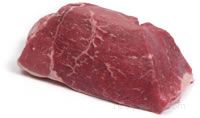 |
| Cuts from the sirloin, such as the tri-tip or the top sirloin butt roast, are used more oft than loin or rib cuts because they are less expensive. Some of the cuts from the round, such equally the acme round or center round, are slightly tough and are better suited to braising than oven roasting. The bottom round (pictured) may exist used as an oven roast if it is of the best quality and if information technology is roasted in a hot oven (450ºF). This will sear the exterior, which will seal in the juices, preventing the meat from becoming likewise tough. A rib roast may be cutting into two sections known as the get-go cut rib roast and the second cut rib roast. The starting time cutting is also called a small terminate rib roast and includes ribs nine through 12, which is nearer the loin primal. It is slightly more than tender than the second cut, also known as the large end rib roast, which includes ribs 6 through 9 and is nearer the chuck cut. A rib roast may include the bones and is known every bit a standing rib roast or it may be boned, rolled, and tied and is known as a rolled rib roast. The tenderloin is the most expensive cut of beefiness. Although the weight and length of the tenderloin may vary, the diameter of the trimmed tenderloin is ever the aforementioned. A tenderloin that is not trimmed may weigh equally much equally nine pounds. Information technology may weigh as much equally 5 pounds when it is trimmed. The trimmed tenderloin makes an excellent roast or it tin be cut into smaller pieces and sold every bit filet steaks. | |
| Pot Roasts A pot roast is basically a cut of beef that is cooked in liquid in a pot on top of the stove. Beef cuts from the chuck and circular are near oftentimes used for pot roast. The chuck department has more fat than the round, which makes chuck roasts more than flavorful than circular roasts. Among the chuck cuts to look for when preparing pot roast are the 7-bone, boneless shoulder, arm, acme blade (pictured), cantankerous rib, and the boneless eye. | 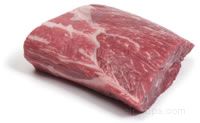 |
| Virtually of the round cuts, which are oftentimes mistakenly purchased as oven roasts, are improve suited to pot-roasting. Some of the all-time pot roasts from the circular include the standing rump, the eye round, and the top round. The brisket cut is also used for pot roast because information technology is very tough. The moist estrus of braising helps to tenderize the meat. | |
| Steaks Some of the most tender steaks are obtained from the loin and the rib sections of the beef carcass. They are also the about expensive. Among these are the filet mignon, T-bone, Porterhouse, rib-eye (pictured), and meridian loin strip, which are most ofttimes prepared with grilling or broiling. | 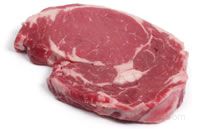 |
| Less expensive and a little less tender are the acme boneless sirloin, tri-tip, and pin os. They are besides best when grilled or broiled, but they tin can go a bit tough if overcooked. Steaks that are flavorful, but tough and require some tenderizing, especially if they are to be grilled or broiled, include the chuck top blade, chuck center, chuck arm, top round, flank, skirt and hanger steak. | |
| Ribs A short rib refers to a small piece that has been trimmed from the main portion of a rib when the rib muzzle is trimmed into smaller cuts. Short ribs are cut from the chuck and plate primals and back ribs are from the rib central. Short ribs cut parallel to the bone are known as English mode short ribs. They may include a bit of the bone or may exist sold boneless. Brusk ribs that are cut beyond the rib bones are known as flanken. | 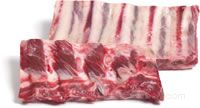 |
| Back ribs (pictured) are the portion remaining afterwards a rib roast is boned. The full back ribs are long and do non have a lot of meat, but they are tender and tasty when grilled. | |
| Stir-Fry When choosing beef for stir-frying, select cuts that are tender and benefit from the quick, high heat cooking procedure of stir-frying. The beef should be cut into small strips and should have very little fat. The strips will ensure that the meat will cook thoroughly, even when it is just cooked for a short time. | 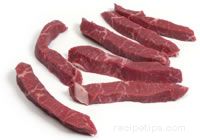 |
| The best beef cuts to utilize for stir-fry are various sirloin cuts or more expensive top loin and rib-eye. It is more than applied to apply tougher, less expensive cuts, such equally chuck arm, bottom round, flank, or brisket, which can be marinated first to tenderize. Cutting the meat across the grain into small strips also makes a tougher cutting seem a bit more tender. | |
| Stew Meat Beefiness for stewing can be purchased already trimmed, cubed, and packaged in most food stores. Information technology is often labeled "stew meat" without describing the cutting from which the meat was obtained. Look for stew meat that has some marbling and connective tissue which will provide more flavor and aid to keep the meat every bit tender every bit possible. | 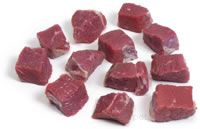 |
| Y'all tin can also purchase the beef cutting of your choice and cut it into pieces at home. It may exist less expensive to trim and cut the beef yourself and every bit a consequence, yous volition know exactly what y'all're getting. Much of the beef used for stewing is obtained from the round cut, but near any tough cut tin can be used because the stewing process helps to tenderize the meat. The all-time beef for stewing, in terms of tenderness and flavour, comes from the chuck. It has plenty of fat and connective tissue that melts during the stewing process, providing season and preventing the meat from becoming tough. | |
| Ground Beefiness In social club to be labeled ground beef, the product must be at to the lowest degree 70% lean. The package may say ground chuck, ground sirloin, or ground circular based on the function of the animal from which the meat has been taken. It may just say ground beef, indicating that the meat may have been taken from several areas of the carcass. The leaner the footing beef, the higher the toll. | 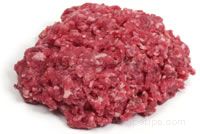 |
| The fat content can of footing beef tin can be determined by the cut from which the ground beef has been obtained. A product labeled ground chuck will contain at least 20% fat. It may even contain more than 20% fat because information technology is legal for suppliers to add together fatty to the product equally long as the fatty content does not exceed thirty%. A production labeled lxx% lean ground chuck indicates that actress fat has been added and the product meets the minimum standards for ground beef. Ground sirloin usually contains virtually fifteen% fat and ground round contains about 11%. Although some of the amend ground beefiness may exist labeled as ground circular or ground sirloin, it may be difficult to know which cuts of beefiness have been used in a bulk of the ground beef sold in food stores. In order to know exactly what y'all are getting, it may be beneficial to purchase the beef cut of your choice and and then grind it at habitation, or yous may accept the butcher grind it for you. | |
For more information on these and other products, see Beefiness Products.
Annotation: When shopping for groceries, fresh beef (equally well as other perishable products) should be selected last in social club to reduce the length of time the meat is without refrigeration. If the meat is without refrigeration for more an hour because of the travel time from the marketplace, a cooler with ice should be used to transport the meat, and any other perishable nutrient items, for the duration of the travel fourth dimension.
Inspection and Grading
USDA Mandatory Inspection
All beef sold in the Usa must pass inspection by the Food Prophylactic and Inspection Service (FSIS) of the United States Department of Agriculture (USDA). The mandatory inspection concentrates on the safety and wholesomeness of the meat and not necessarily the quality. Visual inspection for animal diseases is performed as well a number of scientific tests on a statistical sampling of beef. The tests are used to determine if any biological or chemical contamination is nowadays in the meat. The main business concern is for the rubber of the consumer.

USDA Optional Grading
Unlike the mandatory inspection for prophylactic, which is paid through government funding, beef grading is an option paid for by the processing companies that asking the service. The processing companies use the grading data to determine how each beef carcass is all-time used. Beef is graded for quality and yield. The grade of the beef and the yield grade are stamped in several places on the carcass with an edible purple vegetable dye. Since grading is optional, not all beef sold in the United States is graded. Beefiness that has not been graded is known as "No Curlicue" because the rolling grading stamp is not practical to the outside fat equally is the example with graded beefiness.
| Quality Grading | |
| In terms of quality, the USDA grades meat according to the following: | |
| Marbling | Marbling refers to modest pieces of fat within the meat. Marbling makes the meat more flavorful and tender, then an increase in the degree of marbling raises the level of quality, nonetheless, too much marbling or very thick pieces of marbling lowers the quality of the beef. |
| Age of Animal | The all-time beefiness comes from animals that are 1½ to two years old. If the animal is older than ii½ years, the meat is tougher, just information technology is actually more flavorful. Moist heat cooking methods such every bit braising volition aid to tenderize older beefiness. |
| Miscellaneous Quality Factors | Other factors that determine the quality of beef are color, texture, and compactness of the meat. |
| The USDA uses 8 grading levels to represent the quality of beef. The acme 3 levels are Prime, Choice, and Select. | |
 | Prime number Prime is the peak quality possible and represents only nearly ii% of the beefiness that is graded. It has the most marbling, which makes it the most flavorful and tender. Prime beef is usually only bachelor to restaurants, just is occasionally found in some specialty meat markets. The term "Prime Rib" is misleading equally a description for a cut of beef because it may exist mistakenly interpreted as meaning that the beefiness is graded "Prime". Prime Rib oft refers to a rib roast and unless the meat is served in a better restaurant, the Prime Rib may actually be graded "Choice". |
 | Choice Choice beef is usually the highest course found in nutrient stores and represents about 45% of the graded beef available to the consumer. It has a off-white corporeality of marbling and is juicy and tender (depending on the cutting). |
 | Select Beef graded "Select" is the leanest of the top 3 grades and represents about 20% of the graded total. Because it is the leanest, the Select form has less marbling than Prime or Choice. It is less tender and juicy than higher grades, simply it is also less expensive. Beef graded "Select" is beneficial for people who are watching their fat intake and calories every bit well as their expenses. If all beefiness in the United States were graded, about of information technology would be graded "Select". |
| The other grades of beef every bit determined by the USDA are Standard, which is a notch below Select, followed past Commercial, Utility, Cutter, and Canner. Standard and Commercial grades are often sold in food stores as a store brand with no indication of the actual class. Utility, Cutter, and Canner grades are never plant in food stores, but are mostly used for commercially canned meat products and sausages. | |
| The course of beef that is purchased not merely makes a difference in the tenderness and overall quality of the meat, but also in the method that is selected for cooking. For example, a naturally lean cut such as a lesser circular roast volition have little difference in marbling between the Select class and the Choice and Prime number grades, but there may exist only enough difference in a college grade to allow the meat to be roasted (if information technology is not overcooked) rather than braised, which is the usual cooking method for about beef round cuts. | |
| Yield Grading | |
 | In addition to the quality grading, the USDA uses a yield scale to betoken the ratio of lean to fat within a beef carcass. Yield form i is given to beef that provides the most meat and to the lowest degree amount of fat, while yield class 5 indicates carcasses with the most fat. The yield grade is of particular importance to consumers interested in purchasing a whole or half beef carcass with the greatest percentage of usable meat. |
Religious Restrictions
In addition to the USDA mandatory inspection, some beef sold in the United States is butchered and processed under religious restrictions.
- Kosher: Kosher beefiness is processed using specific guidelines of Jewish law and with the supervision of special rabbis. Kosher meat refers to meat obtained from an fauna which both chews its cud and has split hooves, such equally a moo-cow or sheep. The strict rules of slaughtering accept necessitated the creation of regional centers where the slaughtering is performed. The meat is then shipped to local butchers.
Only the forequarters of a kosher creature are allowed for human consumption. For beef, this would include the surface area from the 10th rib frontward. The hindquarters of the animal comprise the sciatic nerve and fats that are forbidden to be eaten. A wide range of beef cuts, such as sirloin and Tos steaks, are non available as kosher products. Many large nutrient stores stock a range of pre-wrapped kosher meat and frozen meat products.
- Halal: Halal meat is processed by butchers who follow strict Islamic guidelines. Beef must be free of whatsoever other food components that are considered unclean and are prohibited for human consumption. Beefiness must be processed and prepared with equipment gratis from anything considered unclean. The meat must also remain gratuitous from contamination during the processing and grooming. A respectable authority must guarantee that the beef was processed and prepared according to the accustomed guidelines in gild for Muslim consumers to use the products.
Read the Label
The characterization on packaged beef provides a diverseness of information designed to make shopping as easy every bit possible. The label provides the following information depending on the type of beef product that is purchased:
| Description of Beef Cutting The characterization on raw beefiness cuts contains the name of the key cutting the beef was taken from, the name of the retail or marketplace prepare cut, a short description (bone-in or boneless), the total weight, and price per pound. If you are familiar with the different beefiness cuts, having the name of the cut on the label will help you determine if it is the proper leanness and/or tenderness for the type of recipe that you have planned. | 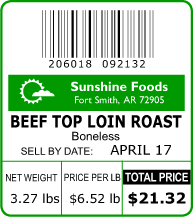 |
| The proper noun of the cut and whether it is os-in or boneless will help you lot determine the quantity to buy according to the weight contained in the packages. A boneless cut will incorporate more servings than the bone-in cut, then it is important to take this into consideration when determining your needs. A bone-in cut may exist lower in price per pound, but when determining your all-time value, you should compare cost per serving. Another important point to consider is that the bone and fat assist give beef corking flavor and tenderness, so it may be worth paying a little extra per serving for the bone-in cut. To determine the cost per serving, use the post-obit equation: toll per pound / # of servings per pound = cost per serving | |
| Sell-By Date Packaged fresh beef will have a "sell-by appointment" printed on the characterization, which represents the last twenty-four hour period recommended for selling the production. More often than not the store will pull any products left on the shelf the day of the "sell-by appointment". If the meat is properly refrigerated, it will remain fresh upward to three days after the "sell-by date" only if it is not to be used within that fourth dimension, it should be frozen. Some labels may have a "use-by appointment" rather than a "sell-past engagement", which indicates the meat should exist cooked or frozen by that date. | 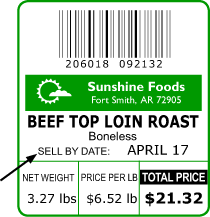 |
| Fully Cooked / Ready-to-Swallow / Rut and Eat Some beef products are precooked, and then the label will indicate that the production is "fully cooked" or "prepare-to-eat". A production such every bit beef dejeuner meat is ready-to-eat, but requires refrigeration and beef jerky is gear up-to-swallow, but it can be stored at room temperature. Other products, such as canned goods, are precooked, merely taste much ameliorate if they are heated before they are consumed. These products are known as "heat and eat". | |
| Nutritional Labeling All commercially prepared and packaged beef products are required to provide nutritional data on the characterization. Raw meat cuts in a food store or butcher shop are exempt from this requirement. The nutritional information shown on the label includes calories, fat and cholesterol content, protein, fiber, sugars, sodium, and diverse vitamins and minerals. | |
| Cooking Instructions If a product is not fully cooked or ready-to-swallow, the label may provide information for proper cooking. | 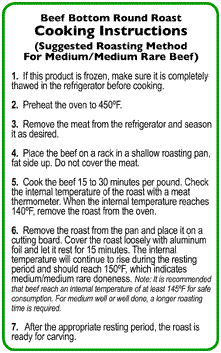 |
| Safe Handling Instructions The label on raw beef or beef that is not fully cooked, volition also incorporate food safety and handling instructions, which are required by the USDA. | 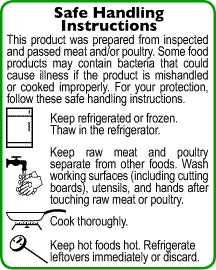 |
Some packaged beef that is labeled "lean" may but refer to the fact that the excess fat has been trimmed from the beef and may non indicate that the cut of beef is really a lean cut. If you buy cuts from the tenderloin or round, y'all tin be sure that they are lean. The tenderloin will not only be lean, but information technology will exist very tender and very expensive. Although round cuts are lean, they are not naturally tender, merely they are much more than affordable. Proper training and cooking helps to tenderize them.
Much of the beef intended for stewing is simply labeled "stew meat" without describing the cut from which the beef was obtained. In most cases, the meat is taken from tougher cuts such equally the bottom round, brisket, or plate.
Look and Feel
| When purchasing packaged fresh beef in a food store, the packages should be cold and the meat should exist firm. The packaging should be in proficient condition with no tears or holes in the wrapping. Beef that has begun to turn a gray color, has dried out edges, and does non smell fresh, should not be purchased. Fatty on the edges of a beef cut should exist a creamy white colour (pictured correct) and never yellow. | 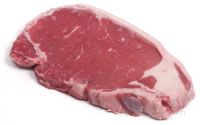 |
| Beef that has a slimy experience should be avoided. Excess liquid may bespeak that the beefiness is old or has been stored at the incorrect temperature. It may too bespeak that the meat has been previously frozen. Beefiness that has little backlog liquid in the package is the best to purchase. | |
| The best beefiness has a brilliant red color (pictured correct). Packaged beef with a blueish-carmine color indicates that the beef has had a lack of exposure to oxygen due to the packaging. The beef will change to a brighter ruddy one time it is removed from the packaging and air has had a take a chance to broadcast around it. Areas of darker red coloring are normal when oxidation occurs. Aged beef has a very dark surface. | 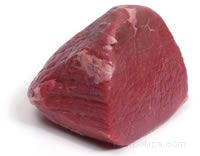 |
| Marbling (pictured right), which refers to bits of fat that may exist distributed throughout a cut of meat, is highly desirable in beefiness cuts. The modest bits of fat tend to melt during cooking, which adds flavor to the beefiness and tenderizes it every bit it cooks. Cuts with the best marbling are usually rated "Prime" and are almost ofttimes sold to restaurants and meat markets rather than to food stores. The marbling in prime cuts looks similar fine strands that run throughout the meat. | 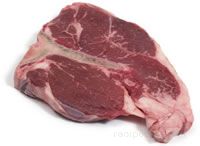 |
| Large quantities of very thick strands of marbling are found in lower grades of beef. Lean beef tends to exist tougher subsequently cooking because of the lack of marbling. The lean beef may be lower in fat and calories, just it lacks the tenderness and flavour of well marbled beef cuts. | |
Quantity to Buy
The following are some points to consider when purchasing cuts of beef:
- Lean boneless cuts yield up to iv servings per pound.
- Beef cuts with some os yield upwardly to iii servings per pound.
- Bony cuts yield no more than 1½ servings per pound.
- 1 serving of a rib roast is equal to half a rib, so if you lot will be serving 8 people, a 4 rib roast should be purchased.
- xvi ounces (one pound) of ground beef produces about four cooked three-ounce servings, which is the serving size recommended for a healthy diet.
- When planning a meal, it is ever improve to purchase too much beefiness than not enough. Ever be prepared for people with larger appetites. If there are leftovers, cooked beef will keep in the refrigerator for several days or the unused portions may exist frozen for long term storage.
| Type of Beefiness Cuts | iii oz. Servings | Type of Beef Cuts | three oz. Servings Per lb. |
| Steaks: | Pot Roasts: | ||
| Tenderloin | four.0 | Chuck Arm (boneless) | 3.0 |
| Porterhouse | two.5 | Chuck Tiptop Blade (boneless) | 3.0 |
| T-bone | ii.5 | Cantankerous Rib (bone-in) | 2.0 |
| Rib-eye | three.0 | Bottom Round | 3.0 |
| Rib | ii.v | Brisket | four.0 |
| Top Loin Strip (boneless) | 4.0 | Rump (bone-in) | 2.0 |
| Pinnacle Sirloin (boneless) | 4.0 | Rump (boneless) | 3.0 |
| Chuck Top Blade | iii.0 | ||
| Acme Round | 4.0 | Ribs: | |
| Flank | four.0 | Short Ribs (bone-in) | ane.five |
| Brim | 4.0 | Short Ribs (boneless) | 2.5 |
| Oven Roasts: | Miscellaneous: | ||
| Tenderloin | 4.0 | Stew Meat | 3.0 |
| Standing Rib | ii.5 | Cross Cut Shanks | 2.0 |
| Rib-Eye | 3.0 | Ground Beef | four.0 |
| Tri-Tip | 4.0 | Organ Meats | 4.0 |
Annotation: You lot can save money past purchasing larger portions of beefiness and and so dividing them into smaller cuts at abode. Larger cuts of beef frequently cost less per pound considering less grooming is required from the butcher. Make certain that yous have a sharp pocketknife and that any beef that will not be used is stored properly in the refrigerator or freezer.
Source: https://www.recipetips.com/kitchen-tips/t--108/beef-shopping-guide.asp
0 Response to "Facts About Beef Shopping for Beef"
Post a Comment